
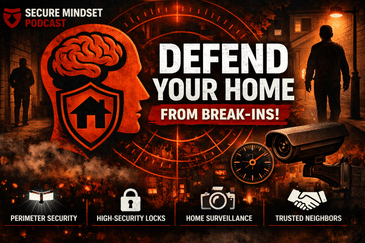


🎯 “Secure Mind, Secure Home”
Most home break-ins do not happen under the cover of darkness. They happen during the day, when homes are empty, routines are predictable, and preventable vulnerabilities go unaddressed.
In this episode, we break down practical, no-nonsense ways to make your home a harder target and strengthen your overall security through layered defense. This is not a conversation about gadgets for the sake of gadgets. It is a grounded look at what actually helps reduce vulnerability and deter opportunistic intruders before a problem reaches your front door.
You will hear practical guidance on perimeter lighting, landscaping, reinforced doors, quality deadbolts, secured windows, sliding door protection, alarms, cameras, smart locks, and the everyday habits that either strengthen security or quietly undermine it. The episode also covers the role of neighbors, social media discipline, and renter-friendly options for apartment dwellers who need effective protection without permanent modifications.
The core principle is simple: security works best in layers. Stronger doors matter. Better visibility matters. Smarter habits matter. Community awareness matters. Each layer adds friction, reduces opportunity, and makes your home less appealing as a target.
Whether you live in a house or an apartment, the goal is the same: identify weak points, harden what you can, and build simple habits that help protect what matters most.
Examined through the Grey Matter Ops approach to civilian readiness, this episode is not about fear or paranoia. It is about preparation, clarity, and disciplined action before a crisis ever has the chance to form.
Train the Mind. Win the Fight.™
Awareness Is Armour.™
Tactical Brief: Secure Mind, Secure Home
Developed by: Mickey Middaugh — Founder, Grey Matter Ops™
Tactical Mindset & Civilian Preparedness
Series: Red Dot Mindset™ Podcast Deep Dive
Mission Motto: Train the Mind. Win the Fight.™
Mission Objective
Strengthen home security through layered defense, from perimeter deterrence to behavioral discipline, and reduce vulnerability through practical, accessible measures. The goal is to help listeners protect property and life through preparation, smart habits, and tactical awareness.
Layered Defense Framework
Outer Perimeter — The Deterrent Zone
Maintain clear sight lines and trim overgrowth to remove concealment near the home
Use motion-activated, flood, and pathway lighting to improve visibility and deter approach
Consider audible deterrents such as gravel near windows or walkways to expose movement
Reinforce the perception of awareness with fencing, locked gates, and defensive landscaping
Entry Points — Fortify the Frontline
Use quality deadbolts on all exterior doors rather than relying on knob latches alone
Rekey locks when moving into a new property to eliminate unknown key access
Avoid obvious spare key locations such as mats, fake rocks, or planters
Reinforce strike plates and hinges with longer screws anchored into structural framing
Add security plates, solid-core doors, door bars, or interior latches to create additional resistance and delay
Windows — The Overlooked Vulnerability
Lock windows consistently and add secondary locks, dowels, or opening limiters where needed
Use anti-lift measures on sliding windows and doors
Consider vibration sensors or alarms for early warning
Technology — Smart Systems, Smarter Users
Use alarm systems that include door and window sensors, motion detection, and glass-break alerts
Build a response plan before an alarm ever triggers, including routes, rally points, and call procedures
Place cameras where they are visible enough to deter, and secure all systems with strong passwords and updated firmware
Evaluate smart locks and connected devices carefully for reliability, privacy, and backup options
Consider systems with cellular backup. Wireless-only systems can be vulnerable to signal disruption, while cellular backup provides a more resilient failover
Renters and apartment dwellers: prioritize portable, non-invasive options such as peel-and-stick sensors and portable alarm systems that move with you and require no permanent alterations.
Behavioral Security — The Human Factor
Practice digital discipline by avoiding real-time posts about travel, absences, or high-value purchases
Build rapport with neighbors and strengthen shared vigilance where possible
Maintain the appearance of occupancy through lighting, mail collection, and general upkeep
Use visible security measures and signage to reinforce deterrence
Crisis Mindset — If the Fight Comes Home
Establish a family defense plan that includes escape routes, safe areas, and communication procedures
Consider lawful defensive options appropriate to your training, your household, and your jurisdiction
Rehearse mentally and keep decision-making simple under stress
Key Takeaways
Deadbolts and reinforced frames form the foundation of home security
Visibility, lighting, and noise help deny concealment and reduce surprise
Smart technology only helps when it is managed well
Community awareness extends security beyond your property line
Preparedness is layered, practical, and built one improvement at a time
Tactical Reflection
Security is not a gadget. It is a mindset. Layers, awareness, and readiness are what make a home harder to target.
Grey Matter Ops™
Train the Mind. Win the Fight.™
Stay Grey. Stay Ready.™
Awareness Is Armour.™